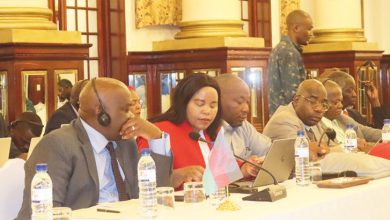
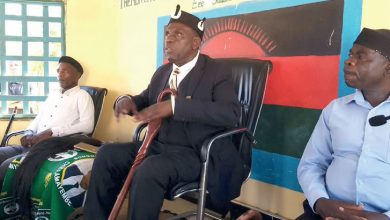
High Court Judge Allan Muhome has allowed private citizen Yamikani Jones Chadza to join the case concerning Speaker of Parliament Sameer Suleman’s 12 parliamentary probes.
In the Order made at the Civil Division in Blantyre, Justice Muhome allowed Chadza to be added as an interested party.

It reads: “Jones Yamikani Chadza be and is hereby added as an Interested Party to these proceedings pursuant to Order 6 rule 7 of the Courts [High Court] [Civil Procedure] Rules, 2017.
“The Interested Party shall be entitled to participate in these proceedings subject to any further directions of the Court and the Claimant and the Defendants shall be served with this Order.”
On September 10, Suleman unveiled investigations into 12 critical issues affecting the country, including fuel supply, electricity, pensions, mining, passport services, prison conditions and the distribution of fertiliser coupons.
The Speaker said the inquiries follow complaints and representations from members of the public concerning household welfare, economic opportunities, and access to essential services, protection of rights and management of public resources.
However, a concerned citizen, Austin Mkoka, filed an urgent judicial review application against Suleman and Parliament, asking the court to determine whether the Legislature has constitutional authority to establish the committees and conduct investigations.
Mkoka also obtained an injunction halting the probes until the court rules on their legality.
Recently, the Malawi Law Society (MLS) also said it will join the case, as amicus curiae (a friend of the court) to provide an independent and neutral perspective alongside submissions from the parties to the case.
MLS president Davis Njobvu said the society’s decision touches on fundamental constitutional and administrative law issues.
“Section 64 of the Legal Education and Legal Practitioners Act provides that one of the objects of the MLS is to protect matters of public interest that are incidental or ancillary to the law. The matter before the courts raises important constitutional questions, including the doctrine of separation of powers, Parliament’s oversight role and broader issues of rule of law, transparency and accountability,” Njobvu said.